





- Appliances
- AC, Fans, Heaters, Humidifiers & Purifiers
- Air Purifiers
Air Purifiers


Sharp Plasmacluster® Ion Air Purifier - FPK50UW


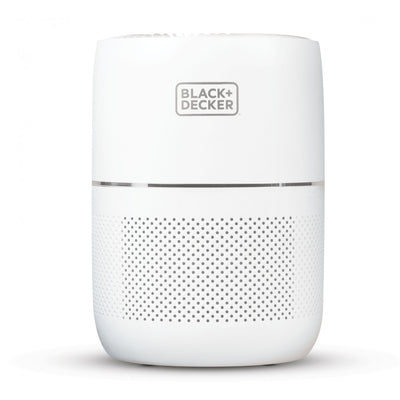


An air purifier is a device designed to remove contaminants from the air in a room to improve indoor air quality. These appliances use fans to draw air through a series of filters that trap dust, pollen, pet dander, and smoke before circulating clean air back into the room. If you suffer from allergies or just want to reduce dust buildup, adding one of these units to your living area is a smart move. Browse our inventory at The Brick and find the right model to help you breathe easier today.
How Air Purifiers Work
Air purifiers draw room air through a series of filters and return cleaned air back into the space. Most residential units use a multi-stage filtration system: a pre-filter captures large particles such as hair and visible dust to extend the life of the main filter, a True HEPA filter captures fine airborne particles, and an activated carbon layer adsorbs gases, volatile organic compounds (VOCs), and odours. Some models add a UV-C lamp stage that targets certain bacteria and viruses after filtration.
Air purifiers clean the air that passes through them — they do not lower room temperature or humidity. For cooling, our Air Conditioners collection covers portable and window-mount units. For air movement without filtration, our Fans collection has pedestal, tower, and table models.
True HEPA vs HEPA-Type Filters
HEPA stands for High Efficiency Particulate Air. The standard is defined by the US Department of Energy and requires a filter to capture at least 99.97% of airborne particles at 0.3 microns in diameter — the Most Penetrating Particle Size (MPPS), which is the hardest particle size to capture. Particles larger or smaller than 0.3 microns are captured at equal or higher efficiency. Products labelled True HEPA meet this specification. Products labelled "HEPA-type," "HEPA-like," or "HEPA-style" are not certified to the same standard and may capture a lower percentage of fine particles.
When comparing air purifiers, the filter labelling on the product page or specification sheet is the most reliable indicator of whether the unit meets the True HEPA standard. This distinction matters most for households managing allergies, asthma, or fine particle concerns such as wildfire smoke.
Matching Purifier Size to Your Room: CADR and ACH
Two numbers help match an air purifier to a specific room. CADR (Clean Air Delivery Rate) measures how many cubic feet of filtered air the unit delivers per minute, separately rated for smoke, dust, and pollen. The AHAM industry guideline for calculating the appropriate CADR for a room is: divide the room's square footage by 1.55 to find the minimum CADR needed for approximately 4.8 air changes per hour (ACH). A 200 sq ft bedroom requires a minimum smoke CADR of approximately 130. A 400 sq ft living room requires approximately 260 CADR.
ACH — Air Changes per Hour — describes how many times the purifier processes the entire room's air volume in one hour. The standard recommendation for general air quality maintenance is 4 to 5 ACH. For allergy or asthma management, 5 or more ACH is recommended. Both CADR and room coverage ratings on product listings assume a standard 8-foot ceiling height. Rooms with higher ceilings require a higher CADR to achieve the same ACH.
Placement for Best Performance
Air purifier placement directly affects performance. The unit requires clear space on all sides for air intake and output — a minimum of 3 to 4 feet of clearance from walls, furniture, and other obstructions is recommended. Corners and enclosed spaces restrict airflow and reduce effective coverage. For general room use, placing the unit at an elevated position — 3 to 5 feet off the ground — captures airborne particles at breathing height more effectively than floor-level placement. In bedrooms, positioning 6 to 10 feet from the head of the bed and directing airflow away from the sleeping area gives effective coverage without directing airflow directly at a person during sleep.
For kitchens, placing the unit near the primary source of odours and smoke — near the cooktop — captures cooking byproducts more efficiently than placing it across the room. A model with an activated carbon filter is better suited for kitchen use than a HEPA-only unit, as activated carbon adsorbs gases and odours that HEPA filtration does not address.
Filter Maintenance
True HEPA filters are not washable and must be replaced on a schedule. Most manufacturers specify replacement every 6 to 12 months under normal use, but this varies by model and the level of airborne particulates in the home. Households with pets, smokers, or high dust levels will reach the replacement interval faster than average. Pre-filters, which catch large debris before it reaches the HEPA layer, are washable on most models and should be rinsed monthly to maintain airflow. Many current models include a filter replacement indicator light that monitors usage hours rather than relying on a fixed calendar schedule.
FAQ About Air Purifiers
What is a True HEPA filter?
True HEPA is an air filter standard defined by the US Department of Energy. A filter must capture at least 99.97% of airborne particles at 0.3 microns in diameter — the Most Penetrating Particle Size — to qualify. This includes fine dust, pollen, pet dander, mould spores, and certain bacteria. Products labelled "HEPA-type" or "HEPA-style" are not certified to this standard. The product page or specification sheet will indicate whether a unit contains a True HEPA filter.
How do I choose the right size air purifier for my room?
Divide your room's square footage by 1.55 to find the minimum smoke CADR rating needed for approximately 4.8 air changes per hour. A 200 sq ft room needs a minimum CADR of roughly 130; a 400 sq ft room needs approximately 260. Check that the room coverage rating on the product listing was calculated at an 8-foot ceiling height. If your ceiling is higher, select a unit rated for a larger square footage than your room's floor area.
Do air purifiers help with pet dander and allergies?
Yes. True HEPA filters capture pet dander, which is a common airborne allergen. For effective allergen reduction, the unit's CADR should be matched to the room size at a minimum of 4 to 5 air changes per hour. Running the purifier continuously in the rooms where pets spend the most time produces the most consistent results, as dander is continually reintroduced into the air.
Where should I place my air purifier?
Place the unit with at least 3 to 4 feet of clear space on all sides, away from corners and furniture. Elevated placement — 3 to 5 feet off the ground — captures particles at breathing height more effectively than floor level. In bedrooms, position the unit 6 to 10 feet from the head of the bed with airflow directed away from the sleeping area. In kitchens, position near the cooktop to capture cooking odours and smoke at the source.
How often do air purifier filters need to be replaced?
True HEPA filters typically require replacement every 6 to 12 months. The actual interval depends on usage hours and the concentration of airborne particles in the home — households with pets, smokers, or high dust levels will need more frequent replacement. Pre-filters on most models are washable and should be rinsed monthly. Many current models include an indicator that monitors actual usage hours and signals when replacement is needed rather than relying on a fixed schedule.


